Facebook Facebook Facebook

468x60 Ads


Guns N' Roses

0 comments


At a time when pop was dominated by dance music and pop-metal, Guns N' Roses brought raw, ugly rock & roll crashing back into the charts. They were not nice boys; nice boys don't play rock & roll. They were ugly, misogynistic, and violent; they were also funny, vulnerable, and occasionally sensitive, as their breakthrough hit, "Sweet Child O' Mine," showed. While Slash and Izzy Stradlin ferociously spit out dueling guitar riffs worthy of Aerosmith or the Stones, Axl Rose screeched out his tales of sex, drugs, and apathy in the big city. Meanwhile, bassist Duff McKagan and drummer Steven Adler were a limber rhythm section who kept the music loose and powerful. Guns N' Roses' music was basic and gritty, with a solid hard, bluesy base; they were dark, sleazy, dirty, and honest -- everything that good hard rock and heavy metal should be. There was something refreshing about a band that could provoke everything from devotion to hatred, especially since both sides were equally right. There hadn't been a hard rock band this raw or talented in years, and they were given added weight by Rose's primal rage, the sound of confused, frustrated white trash vying for his piece of the pie. As the '80s became the '90s, there simply wasn't a more interesting band around, but owing to intra-band friction and the emergence of alternative rock, Rose's supporting cast gradually disintegrated, as he spent years in seclusion.

Appetite for Destruction
Guns N' Roses released their first EP in 1986, which led to a contract with Geffen; the following year, the band released its debut album, Appetite for Destruction. They started to build a following with their numerous live shows, but the album didn't start selling until almost a year later, when MTV started playing "Sweet Child O' Mine." Soon, both the album and single shot to number one, and Guns N' Roses became one of the biggest bands in the world. Their debut single, "Welcome to the Jungle," was re-released and shot into the Top Ten, and "Paradise City" followed in its footsteps. By the end of 1988, they released G N' R Lies, which paired four new, acoustic-based songs (including the Top Five hit "Patience") with their first EP. G N' R Lies' inflammatory closer, "One in a Million," sparked intense controversy, as Rose slipped into misogyny, bigotry, and pure violence; essentially, he somehow managed to distill every form of prejudice and hatred into one five-minute tune.
Use Your Illusion I
Guns N' Roses began work on the long-awaited follow-up to Appetite for Destruction at the end of 1990. In October of that year, the band fired Adler, claiming that his drug dependency caused him to play poorly; he was replaced by Matt Sorum from the Cult. During recording, the band added Dizzy Reed on keyboards. By the time the sessions were finished, the new album had become two new albums. After being delayed for nearly a year, the albums Use Your Illusion I and Use Your Illusion II were released in September 1991. Messy but fascinating, the albums showcased a more ambitious band; while there were still a fair number of full-throttle guitar rockers, there were stabs at Elton John-style balladry, acoustic blues, horn sections, female backup singers, ten-minute art rock epics with several different sections, and a good number of introspective, soul-searching lyrics. In short, they were now making art; amazingly, they were successful at it. The albums sold very well initially, but while they had seemed destined to set the pace for the decade to come, that turned out not to be the case at all.
Nevermind
Nirvana's Nevermind hit number one in early 1992, suddenly making Guns N' Roses -- with all of their pretensions, impressionistic videos, models, and rock star excesses -- seem very uncool. Rose handled the change by becoming a dictator, or at least a petty tyrant; his in-concert temper tantrums became legendary, even going so far as to incite a riot in Montreal. Stradlin left by the end of 1991, and with his departure the band lost its best songwriter; he was replaced by ex-Kills for Thrills guitarist Gilby Clarke. GNR didn't fully grasp the shift in hard rock until 1993, when they released an album of punk covers, The Spaghetti Incident?; it received some good reviews, but the band failed to capture the reckless spirit of not only the original versions, but its own Appetite for Destruction. By the middle of 1994, there were rumors flying that GNR were about to break up, since Rose wanted to pursue a new, more industrial direction and Slash wanted to stick with their blues-inflected hard rock. The band remained in limbo for several more years, and Slash resurfaced in 1995 with the side project Slash's Snakepit and an LP, It's Five O'Clock Somewhere.
Live: Era '87-'93
Rose remained out of the spotlight, becoming a virtual recluse and doing nothing but tinkering in the studio; he also recruited various musicians -- including Dave Navarro, Tommy Stinson, and ex-Nine Inch Nails guitarist Robin Finck -- for informal jam sessions. Remaining members were infuriated by Rose's inclusion of childhood friend Paul Huge in the new sessions when both Stradlin and Clarke were excluded from rejoining the band. And a remake of the Rolling Stones' "Sympathy for the Devil" was essentially the straw that broke the camel's back, as Rose cut out some of the other members' contributions and pasted Huge over the song without consulting anyone else. By 1996, Slash was officially out of Guns N' Roses, leaving Rose the lone remaining survivor from the group's heyday; rumors continued to swirl, and still no new material was forthcoming, though Rose did re-record Appetite for Destruction with a new lineup for rehearsal purposes. The first new original GNR song in eight years, the industrial metal sludge of "Oh My God" finally appeared on the soundtrack to the 1999 Arnold Schwarzenegger film End of Days. Soon after, Geffen issued the two-disc Live Era: '87-'93. The year 2000 brought the addition of guitarists Robin Finck (of Nine Inch Nails) and Buckethead, and 2001 was greeted with Guns N' Roses' first live dates in nearly seven years, as the band (which consisted of Rose plus guitarists Finck and Buckethead, bassist Stinson, former Primus drummer Brian "Brain" Mantia, childhood friend and guitarist Paul Huge, and longtime GNR keyboardist Dizzy Reed) played a show on New Year's Eve 2000 in Las Vegas, playing as well at the mammoth Rock in Rio festival the following month. On New Year's Eve 2001, the band played almost the exact same set as the year before.
An appearance at MTV's 2002 Video Music Awards helped garner interest in the new lineup, but a rusty performance from Rose and an interview where he said his new album wasn't coming out anytime soon didn't do much to further their cause. That summer, GNR started on their first tour in almost eight years, and they managed to fulfill all of their commitments in Europe and Asia. Sadly, they caused a violent and destructive riot in Vancouver when Rose failed to show up for the first date of their North American tour. While he was up to his old shenanigans with the retooled lineup, former Stone Temple Pilots vocalist Scott Weiland, Slash, Sorum, and McKagan formed the successful Velvet Revolver in spring 2002.

Chinese Democracy
And so years passed and still no new GNR album, to the point where it became one joke too many. The album was long billed as Chinese Democracy, and occasionally session recordings would leak and make their way onto Internet file-sharing networks. A fascinating article written by Jeff Leeds for The New York Times, published in March 2005, revealed how tangled and costly the making of the album had become. According to the article, titled "The Most Expensive Album Never Released," Rose began work on the album in 1994 and racked up production costs of at least $13 million dollars. Producers involved with the album at one time or another included Mike Clink, Youth, Sean Beavan, and even Roy Thomas Baker. (Curiously, Moby claimed to have been offered the job as well.) Marco Beltrami and Paul Buckmaster were allegedly brought in for orchestral arrangements, and there was a revolving door of guitarists. In 2006, the album seemed closer to release, as Rose began surfacing in public and even took his band on the road for some shows. The music industry's biggest boondoggle finally bore fruit in 2008 when Axl unveiled a record that was well over a decade in the making. While Chinese Democracy received many rave reviews, and the critical response was positive overall, the record underperformed (its almost impossible) expectations, debuting at number three on the Billboard 200 when it came out in November. A worldwide tour followed.

http://www.allmusic.com

Avenged Sevenfold

0 comments


The members of metalcore outfit Avenged Sevenfold (or A7X) were still attending high school in Huntington Beach, California, when they formed their band in 1999. Nevertheless, it didn't take long for M. Shadows (vocals), Zacky Vengeance (guitar), Synyster Gates (guitar), the Reverend (drums), and Johnny Christ (bass) to make an impression with their aggressive hybrid of metal, hard rock, and punk-pop. The band made its official debut in July 2001, releasing Sounding the Seventh Trumpet on the Goodlife label before moving to the Hopeless roster for 2003's Waking the Fallen. Warner Bros. took interest in the band's aggressive sound and issued its breakthrough release, City of Evil, in June 2005. The album reached number 30 on Billboard's Top 200, propelled in part by the Top Ten success of the single "Bat Country." The accompany music video was heavily rotated on MTV and Fuse, where live appearances also helped boost Avenged's growing profile, and the band ultimately won the Best New Artist Award (though they were hardly newcomers) at the 2006 MTV Video Music Awards.

Live in the LBC and Diamonds in the Rough
As demand for their music increased, Avenged Sevenfold canceled their tour dates for fall 2006 and set to work on a fourth studio album. Boasting a grittier sound than previous releases, the self-titled/self-produced disc appeared in October 2007, debuting at number four on the Billboard Top 200 and spinning off the radio single "Almost Easy." The album also fared well in England, where three songs cracked the Top Five of the U.K. rock charts, and Avenged Sevenfold helped support the release by touring North America on the Taste of Chaos tour. Released in September 2008, the CD/DVD package Live in the LBC and Diamonds in the Rough captured the band during a tour stop in Long Beach. In 2009 the band announced plans to begin work on its third studio release. That same year, drummer Jimmy "The Rev" Sullivan passed away at the age of 28. In 2010 the band released Nightmare with replacement drummer Mike Portnoy (Dream Theater). In 2011, they recorded the song "Carry On" for the Call of Duty Arms: Black Ops II video game, before releasing 2013's Hail to the King, which featured new drummer Arin Ilejay of Confide.

http://www.allmusic.com

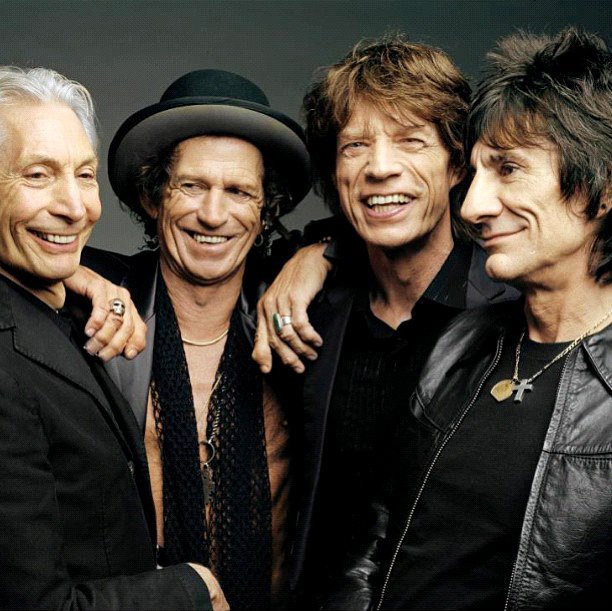
the Rolling Stones

0 comments


By the time the Rolling Stones began calling themselves the World's Greatest Rock & Roll Band in the late '60s, they had already staked out an impressive claim on the title. As the self-consciously dangerous alternative to the bouncy Merseybeat of the Beatles in the British Invasion, the Stones had pioneered the gritty, hard-driving blues-based rock & roll that came to define hard rock. With his preening machismo and latent maliciousness, Mick Jagger became the prototypical rock frontman, tempering his macho showmanship with a detached, campy irony while Keith Richards and Brian Jones wrote the blueprint for sinewy, interlocking rhythm guitars. Backed by the strong yet subtly swinging rhythm section of bassist Bill Wyman and drummer Charlie Watts, the Stones became the breakout band of the British blues scene, eclipsing such contemporaries as the Animals and Them. Over the course of their career, the Stones never really abandoned blues, but as soon as they reached popularity in the U.K., they began experimenting musically, incorporating the British pop of contemporaries like the Beatles, Kinks, and Who into their sound. After a brief dalliance with psychedelia, the Stones re-emerged in the late '60s as a jaded, blues-soaked hard rock quintet. The Stones always flirted with the seedy side of rock & roll, but as the hippie dream began to break apart, they exposed and reveled in the new rock culture. It wasn't without difficulty, of course. Shortly after he was fired from the group, Jones was found dead in a swimming pool, while at a 1969 free concert at Altamont, a concertgoer was brutally killed during the Stones' show. But the Stones never stopped going. For the next 30 years, they continued to record and perform, and while their records weren't always blockbusters, they were never less than the most visible band of their era -- certainly, none of their British peers continued to be as popular or productive as the Stones. And no band since has proven to have such a broad fan base or far-reaching popularity, and it is impossible to hear any of the groups that followed them without detecting some sort of influence, whether it was musical or aesthetic.
Throughout their career, Mick Jagger (vocals) and Keith Richards (guitar, vocals) remained at the core of the Rolling Stones. The pair initially met as children at Dartford Maypole County Primary School. They drifted apart over the next ten years, eventually making each other's acquaintance again in 1960, when they met through a mutual friend, Dick Taylor, who was attending Sidcup Art School with Richards. At the time, Jagger was studying at the London School of Economics and playing with Taylor in the blues band Little Boy Blue and the Blue Boys. Shortly afterward, Richards joined the band. Within a year, they had met Brian Jones (guitar, vocals), a Cheltenham native who had dropped out of school to play saxophone and clarinet. By the time he became a fixture on the British blues scene, Jones had already had a wild life. He ran away to Scandinavia when he was 16; by that time, he had already fathered two illegitimate children. He returned to Cheltenham after a few months, where he began playing with the Ramrods. Shortly afterward, he moved to London, where he played in Alexis Korner's group, Blues Inc. Jones quickly decided he wanted to form his own group and advertised for members; among those he recruited was the heavyset blues pianist Ian Stewart.
As he played with his group, Jones also moonlighted under the name Elmo Jones at the Ealing Blues Club. At the pub, he became reacquainted with Blues, Inc., which now featured drummer Charlie Watts, and, on occasion, cameos by Jagger and Richards. Jones became friends with Jagger and Richards, and they soon began playing together with Taylor and Stewart; during this time, Mick was elevated to the status of Blues, Inc.'s lead singer. With the assistance of drummer Tony Chapman, the fledgling band recorded a demo tape. After the tape was rejected by EMI, Taylor left the band to attend the Royal College of Art; he would later form the Pretty Things. Before Taylor's departure, the group named itself the Rolling Stones, borrowing the moniker from a Muddy Waters song.
The Rolling Stones gave their first performance at the Marquee Club in London on July 12, 1962. At the time, the group consisted of Jagger, Richards, Jones, pianist Ian Stewart, drummer Mick Avory, and Dick Taylor, who had briefly returned to the fold. Weeks after the concert, Taylor left again and was replaced by Bill Wyman, formerly of the Cliftons. Avory also left the group -- he would later join the Kinks -- and the Stones hired Tony Chapman, who proved to be unsatisfactory. After a few months of persuasion, the band recruited Charlie Watts, who had quit Blues, Inc. to work at an advertising agency once the group's schedule became too hectic. By 1963, the band's lineup had been set, and the Stones began an eight-month residency at the Crawdaddy Club, which proved to substantially increase their fan base. It also attracted the attention of Andrew Loog Oldham, who became the Stones' manager, signing them from underneath the Crawdaddy Club's Giorgio Gomelsky. Although Oldham didn't know much about music, he was gifted at promotion, and he latched upon the idea of fashioning the Stones as the bad-boy opposition to the clean-cut Beatles. At his insistence, the large yet meek Stewart was forced out of the group, since his appearance contrasted with the rest of the group. Stewart didn't disappear from the Stones; he became one of their key roadies and played on their albums and tours until his death in 1985.
With Oldham's help, the Rolling Stones signed with Decca Records, and that June, they released their debut single, a cover of Chuck Berry's "Come On." The single became a minor hit, reaching number 21, and the group supported it with appearances on festivals and package tours. At the end of the year, they released a version of Lennon-McCartney's "I Wanna Be Your Man" that soared into the Top 15. Early in 1964, they released a cover of Buddy Holly's "Not Fade Away," which shot to number three. "Not Fade Away" became their first American hit, reaching number 48 that spring. By that time, the Stones were notorious in their homeland. Considerably rougher and sexier than the Beatles, the Stones were the subject of numerous sensationalistic articles in the British press, culminating in a story about the band urinating in public. All of these stories cemented the Stones as a dangerous, rebellious band in the minds of the public, and had the effect of beginning a manufactured rivalry between them and the Beatles, which helped the group rocket to popularity in the U.S. In the spring of 1964, the Stones released their eponymous debut album, which was followed by "It's All Over Now," their first U.K. number one.

5 X 5
That summer, they toured America to riotous crowds, recording the Five by Five EP at Chess Records in Chicago in the midst of the tour. By the time it was over, they had another number one U.K. single with Howlin' Wolf's "Little Red Rooster." Although the Stones had achieved massive popularity, Oldham decided to push Jagger and Richards into composing their own songs, since they -- and his publishing company -- would receive more money that away. In June of 1964, the group released their first original single, "Tell Me (You're Coming Back)," which became their first American Top 40 hit. Shortly afterward, a version of Irma Thomas' "Time Is on My Side" became their first U.S. Top Ten. It was followed by "The Last Time" in early 1965, a number one U.K. and Top Ten U.S. hit that began a virtually uninterrupted string of Jagger-Richards hit singles. Still, it wasn't until the group released "(I Can't Get No) Satisfaction" in the summer of 1965 that they were elevated to superstars. Driven by a fuzz-guitar riff designed to replicate the sound of a horn section, "Satisfaction" signaled that Jagger and Richards had come into their own as songwriters, breaking away from their blues roots and developing a signature style of big, bluesy riffs and wry, sardonic lyrics. It stayed at number one for four weeks and began a string of Top Ten singles that ran for the next two years, including such classics as "Get Off My Cloud," "19th Nervous Breakdown," "As Tears Go By," and "Have You Seen Your Mother, Baby, Standing in the Shadow?"
Aftermath
By 1966, the Stones had decided to respond to the Beatles' increasingly complex albums with their first album of all-original material, Aftermath. Due to Brian Jones' increasingly exotic musical tastes, the record boasted a wide range of influences, from the sitar-drenched "Paint It, Black" to the Eastern drones of "I'm Going Home." These eclectic influences continued to blossom on Between the Buttons (1967), the most pop-oriented album the group ever made. Ironically, the album's release was bookended by two of the most notorious incidents in the band's history. Before the record was released, the Stones performed the suggestive "Let's Spend the Night Together," the B-side to the medieval ballad "Ruby Tuesday," on The Ed Sullivan Show, which forced Jagger to alter the song's title to an incomprehensible mumble, or else face being banned.
Their Satanic Majesties Request
In February of 1967, Jagger and Richards were arrested for drug possession, and within three months, Jones was arrested on the same charge. All three were given suspended jail sentences, and the group backed away from the spotlight as the summer of love kicked into gear in 1967. Jagger, along with his then-girlfriend Marianne Faithfull, went with the Beatles to meet the Maharishi Mahesh Yogi; they were also prominent in the international broadcast of the Beatles' "All You Need Is Love." Appropriately, the Stones' next single, "Dandelion"/"We Love You," was a psychedelic pop effort, and it was followed by their response to Sgt. Pepper, Their Satanic Majesties Request, which was greeted with lukewarm reviews.
Beggars Banquet
The Stones' infatuation with psychedelia was brief. By early 1968, they had fired Andrew Loog Oldham and hired Allen Klein as their manager. The move coincided with their return to driving rock & roll, which happened to coincide with Richards' discovery of open tunings, a move that gave the Stones their distinctively fat, powerful sound. The revitalized Stones were showcased on the malevolent single "Jumpin' Jack Flash," which climbed to number three in May 1968. Their next album, Beggar's Banquet, was finally released in the fall, after being delayed for five months due its controversial cover art of a dirty, graffiti-laden restroom. An edgy record filled with detours into straight blues and campy country, Beggar's Banquet was hailed as a masterpiece among the fledgling rock press. Although it was seen as a return to form, few realized that while it opened a new chapter of the Stones' history, it also was the closing of their time with Brian Jones. Throughout the recording of Beggar's Banquet, Jones was on the sidelines due to his deepening drug addiction and his resentment of the dominance of Jagger and Richards. Jones left the band on June 9, 1969, claiming to be suffering from artistic differences between himself and the rest of the band. On July 3, 1969 -- less than a month after his departure -- Jones was found dead in his swimming pool. The coroner ruled that it was "death by misadventure," yet his passing was the subject of countless rumors over the next two years.
Let It Bleed
By the time of his death, the Stones had already replaced Brian Jones with Mick Taylor, a former guitarist for John Mayall's Bluesbreakers. He wasn't featured on "Honky Tonk Women," a number one single released days after Jones' funeral, and he contributed only a handful of leads on their next album, Let It Bleed. Released in the fall of 1969, Let It Bleed was comprised of sessions with Jones and Taylor, yet it continued the direction of Beggar's Banquet, signaling that a new era in the Stones' career had begun, one marked by ragged music and an increasingly wasted sensibility. Following Jagger's filming of Ned Kelly in Australia during the first part of 1969, the group launched its first American tour in three years. Throughout the tour -- the first where they were billed as the World's Greatest Rock & Roll Band -- the group broke attendance records, but it was given a sour note when the group staged a free concert at Altamont Speedway. On the advice of the Grateful Dead, the Stones hired Hell's Angels as security, but that plan backfired tragically. The entire show was unorganized and in shambles, yet it turned tragic when the Angels killed a young black man, Meredith Hunter, during the Stones' performance. In the wake of the public outcry, the Stones again retreated from the spotlight and dropped "Sympathy for the Devil," which some critics ignorantly claimed incited the violence, from their set. As the group entered a hiatus, they released the live Get Yer Ya-Ya's Out! in the fall of 1970. It was their last album for Decca/London, and they formed Rolling Stones Records, which became a subsidiary of Atlantic Records.
Sticky Fingers
During 1970, Jagger starred in Nicolas Roeg's cult film Performance and married Nicaraguan model Bianca Perez Morena de Macias, and the couple quickly entered high society. As Jagger was jet-setting, Richards was slumming, hanging out with country-rock pioneer Gram Parsons. Keith wound up having more musical influence on 1971's Sticky Fingers, the first album the Stones released though their new label. Following its release, the band retreated to France on tax exile, where they shared a house and recorded a double album, Exile on Main St. Upon its May 1972 release, Exile on Main St. was widely panned, but over time it came to be considered one of the group's defining moments.
Goats Head Soup
Following Exile, the Stones began to splinter in two, as Jagger concentrated on being a celebrity and Richards sank into drug addiction. The band remained popular throughout the '70s, but their critical support waned. Goats Head Soup, released in 1973, reached number one, as did 1974's It's Only Rock 'n' Roll, but neither record was particularly well received. Taylor left the band after It's Only Rock 'n' Roll, and the group recorded their next album as they auditioned new lead guitarists, including Jeff Beck. They finally settled on Ron Wood, former lead guitarist for the Faces and Rod Stewart, in 1976, the same year they released Black n' Blue, which only featured Wood on a handful of cuts. During the mid- and late '70s, all the Stones pursued side projects, with both Wyman and Wood releasing solo albums with regularity. Richards was arrested in Canada in 1977 with his common-law wife Anita Pallenberg for heroin possession. After his arrest, he cleaned up and was given a suspended sentence the following year.
Some Girls
The band reconvened in 1978 to record Some Girls, an energetic response to punk, new wave, and disco. The record and its first single, the thumping disco-rocker "Miss You," both reached number one, and the album restored the group's image. However, the group squandered that goodwill with the follow-up, Emotional Rescue, a number one record that nevertheless received lukewarm reviews upon its 1980 release. Tattoo You, released the following year, fared better both critically and commercially, as the singles "Start Me Up" and "Waiting on a Friend" helped the album spend nine weeks at number one. The Stones supported Tattoo You with an extensive stadium tour captured in Hal Ashby's movie Let's Spend the Night Together and the 1982 live album Still Life.
Undercover
Tattoo You proved to be the last time the Stones completely dominated the charts and the stadiums. Although the group continued to sell out concerts in the '80s and '90s, their records didn't sell as well as previous efforts, partially because the albums suffered due to Jagger and Richards' notorious mid-'80s feud. Starting with 1983's Undercover, the duo conflicted about which way the band should go, with Jagger wanting the Stones to follow contemporary trends and Richards wanting them to stay true to their rock roots. As a result, Undercover was a mean-spirited, unfocused record that received relatively weak sales and mixed reviews. Released in 1986, Dirty Work suffered a worse fate, since Jagger was preoccupied with his fledgling solo career. Once Jagger decided that the Stones would not support Dirty Work with a tour, Richards decided to make his own solo record with 1988's Talk Is Cheap. Appearing a year after Jagger's failed second solo album, Talk Is Cheap received good reviews and went gold, prompting Jagger and Richards to reunite late in 1988.
Steel Wheels
The following year, the Stones released Steel Wheels, which was received with good reviews, but the record was overshadowed by its supporting tour, which grossed over 140 million dollars and broke many box office records. In 1991, the live album Flashpoint, which was culled from the Steel Wheels shows, was released. Following the release of Flashpoint, Bill Wyman left the band; he published a memoir, Stone Alone, within a few years of leaving. The Stones didn't immediately replace Wyman, since they were all working on solo projects; this time, there was none of the animosity surrounding their mid-'80s projects.
Voodoo Lounge
The group reconvened in 1994 with bassist Darryl Jones, who had previously played with Miles Davis and Sting, to record and release the Don Was-produced Voodoo Lounge. The album received the band's strongest reviews in years, and its accompanying tour was even more successful than the Steel Wheels tour. On top of being more successful than its predecessor, Voodoo Lounge also won the Stones their first Grammy for Best Rock Album. Upon the completion of the Voodoo Lounge tour, the Stones released the live, "unplugged" album Stripped in the fall of 1995. Similarly, after wrapping up their tour in support of 1997's Bridges to Babylon, the group issued yet another live set, No Security, the following year. A high-profile greatest-hits tour in 2002 was launched despite the lack of a studio album to support, and its album document, Live Licks, appeared in 2004. A year later, the group issued A Bigger Bang, their third effort with producer Don Was.
Shine a Light: Original Soundtrack
In 2006, Martin Scorsese filmed two of the group's performances at New York City's Beacon Theatre. The resulting Shine a Light, which included guest appearances from Buddy Guy, Jack White, and Christina Aguilera, was released in theaters in 2008. The accompanying soundtrack reached the number two spot on the U.K. charts. Following Shine a Light, the Stones turned their attention toward their legacy. For Keith Richards, this meant delving into writing his autobiography Life -- the memoir was published to acclaim in the fall of 2010; it generated some controversy due to comments Keith made about Mick -- but the Stones in general spent time mining their archives, something they previously avoided. In 2010, they released a super deluxe edition of Exile on Main St. that contained a bonus disc of rarities and outtakes, including a few newly finished songs like "Plundered My Soul." This was followed in 2011 by a super deluxe edition of Some Girls that also contained unheard songs and outtakes. That same year, the Stones opened up their Rolling Stones Archive, which offered official digital releases of classic live bootlegs like 1973's The Brussels Affair. All this was a prelude to their 50th anniversary in 2012, which the group celebrated with a hardcover book, a new documentary called Crossfire Hurricane and a new compilation called GRRR!. The Stones also played a handful of star-studded concerts at the end of the year and in the first half of 2013, several of which featured guest spots from the long-departed Mick Taylor . These live shows culminated with a headlining spot at Glastonbury and two July 2013 concerts at Hyde Park; highlights from the Hyde Park shows were released as a digital download on iTunes that July and, later in the year, there was a home video/CD release of the concert called Sweet Summer Sun: Live In Hyde Park.

http://www.allmusic.com

Brian May

0 comments


  • Date Of Birth July 19, 1947
  • Birthplace Twickenham, England
  • Instruments Guitars, keyboards, vocals
With a musical career spanning four decades, Queen founding member Brian May is a world-renowned guitarist and songwriter, with production and performance credits on recordings which have sold in excess of 100 million copies worldwide.

Brian has penned 22 worldwide hits for Queen; among them the anthems ‘We Will Rock You’, ‘The Show Must Go On’ and ‘I Want It All’, and powerful ballads including ‘Who Wants to Live Forever’, ‘No-One But You (Only the Good Die Young)‘ and ‘Save Me’. As a successful and respected solo artist, Brian’s recordings include the albums Back to the Light (1992), featuring ‘Too Much Love Will Kill You’ and ‘Driven By You’, both Ivor Novello Award-winners, and 1998’s Another World. His songs continue to influence new generations of performers and have inspired recordings by artists as diverse as Elton John, Def Leppard, the Royal Philharmonic Orchestra, Shirley Bassey and Eminem. Brian has enjoyed collaborations with numerous artists including Robbie Williams, the Foo Fighters, Cliff Richard, Guns ‘n’ Roses, Diana Ross and Luciano Pavarotti. He was also proud to play feature guitar on the Winter Olympics 2002 opening music, ‘The Fire Within’ for his friend and composer, the late Michael Kamen.

Perhaps the most memorable display of Brian’s unique style and musicianship was his performance of his own arrangement of ‘God Save the Queen’, live from the roof of Buckingham Palace, to open HM The Queen’s 2002 Golden Jubilee celebrations in front of an audience of more than 200 million people around the world.

An interest in film scoring developed when Queen became the first rock group to score a major film, Flash Gordon, featuring the hit ‘Flash!’ penned by Brian. This was followed by definitive music for Highlander. Brian later contributed a mini-opera for Steve Baron’s 1996 Pinocchio, and composed a complete film soundtrack for the 1999 French art film Furia.

May is, of course, no stranger to the theatrical world, frequently contributing to the live performance work of his wife Anita Dobson, but in 1987, entering this world in his own right, he wrote and performed the music for the London Riverside Studios production of Macbeth. He returned at full strength to the Theatre in 2002, as one of the principal creative forces behind the groundbreaking ‘rock theatrical’, We Will Rock You, which became phenomenally successful, still one of London’s top-selling shows after nine years of nightly standing ovations at the Dominion Theatre, London, and easily the longest-running show ever to play at the theatre. Although We Will Rock You is now a global enterprise, Brian remains personally involved in developing new productions and updating those currently playing.

On Freddie’s death, the surviving members of Queen set up a charity to support AIDS relief, the Mercury Phoenix Trust. The MPT has to date channelled more than eight million pounds to over 1,000 AIDS projects around the world. An ongoing commitment to AIDS awareness led Queen to become a driving force in the 46664 campaign for the Nelson Mandela Foundation. The first of a series of 46664 concerts, held in Cape Town in November 2003, was broadcast worldwide via TV, Internet and radio, becoming the most widely distributed media event in history, with an audience of over 2 billion in 166 countries. Brian continues in his role as an ambassador and participant in the 46664 international concert series aimed at promoting AIDS awareness worldwide.

Queen’s musical catalogue consistently tops popularity polls, and their achievements have been recognised with numerous prestigious awards, including being honoured with a star on the Hollywood Walk of Fame (October 2002), being inducted into both the USA Rock and Roll Hall of Fame (March 2001) and the Songwriters Hall of Fame (June 2003), and being among the first inductees into the UK Music Hall of Fame (November 2004), which was the first event at which Paul Rodgers joined Brian and Roger as vocalist. A successful world tour together followed in 2005/06, and Paul, Brian and Roger (Taylor) then went into the studio to create new material for the well-received Queen/Paul Rodgers album “The Cosmos Rocks”, followed by a second giant world tour. 

In July 2005, Guinness World Records announced that Queen had overtaken the Beatles to become the most successful albums act in UK chart history.

Brian’s further credits are too numerous to list, but they include designing a Planetarium show currently showing in Germany and Belgium; re-mixing classic Queen recordings in 5.1 Surround Sound; writing themes for several TV shows; producing a number 1 hit, ‘The Stonk’, for Comic Relief’s Red Nose Day; as well as lending his inspirational skills to the three top-selling volumes of The Best Air Guitar Album in the World...Ever!  His most recent musical work is the spectacular debut album from singer Kerry Ellis, an original leading actress of WWRY, and recently star of Wicked in the West End and on Broadway. This epic album, titled “Anthems”, features Brian’s arrangement, production, and guitar work, and some new products of Brian’s songwriting.

Retaining his keen interest in astronomy, Brian is a regular contributor to The Sky at Night for his long-time friend, Sir Patrick Moore, with whom he co-authored, along with Dr Chris Lintott, an illustrated astrophysics book entitled BANG! The Complete History of the Universe. First published in 2006, it has since been published in 20 languages, and is currently in its third updated edition. Brian followed up with a unique book on another of his long-term passions, seminal 1850s photographer T. R. Williams whose work Brian has been researching for over 30 years. The book, “A Village Lost and Found”, written with photohistorian Elena Vidal, is illustrated in 3-D, and includes a patent stereoscope of Brian’s own design. 

In December 2005, Brian was honoured with a CBE, Commander of the Order of the British Empire, by HM The Queen, in recognition of his services to music.

In 2007, after a 30-year break pursuing his musical career, Brian returned to Imperial College, London, to sign up to complete his Doctoral Thesis in Astrophysics, and after one year, successfully submitted the new version of his thesis on Interplanetary Dust.

Already the holder of honorary degrees from the Universities of Hertfordshire, Exeter and John Moore’s, Liverpool, Brian in 2007 finally achieved the award of a full PhD degree.  Brian subsequently accepted a post of Visiting Researcher at Imperial College and will be continuing his work in astronomy. He is also currently the Chancellor or Liverpool John Moore’s University. 

In 2010 Brian founded Save-Me, a campaign devoted to preventing cruelty to wild animals.  His work fighting the abuse of foxes and badgers led to him recently being awarded the honour of “Campaigner of the Year” by IFAW, the International fund for Animal Welfare.  This work continues through the Save-Me website … www.Save-Me.org.uk. 

Brian enjoys interacting with his friends and fans, who can contact him and enjoy updates on his work and thoughts via his own channel, Brian’s Soapbox, on his website at www.brianmay.com.

Wikipedia Entry: Brian May

Queen

0 comments


Queen formed in 1971 and in 1973 signed their first recording contract for EMI. That year they released their first album, QUEEN. The same year saw their first major UK tour, and in 1974 they released QUEEN II as well as making their first UK headlining tour. They made their first US tour, and in November released SHEER HEART ATTACK which was a hit on both sides of the Atlantic.
 

1975 saw their new release, A NIGHT AT THE OPERA, and – significantly – the single Bohemian Rhapsody. At 5’ 55” it should have been too long for successful radio play but it became one of the greatest singles of all time, staying at No. 1 in the UK chart for nine weeks. The video, directed by Bruce Gowers, is credited with being the first genuine promotional video. The song has regularly featured in all major pop polls and was recently named again as the best single of all time. The success of A NIGHT AT THE OPERA was equally stunning, giving the band their first platinum album.
In 1976 they toured the US and Japan and by spring all four albums resided in the UK Top Twenty. Later that year they released A DAY AT THE RACES, and gave a free concert in Hyde Park to an estimated crowd of 200,000 fans. The album was a huge success, advance orders alone amounting to over 500,000. The following year saw two major US tours, the band’s sixth album, NEWS OF THE WORLD and the legendary double A side single, WE WILL ROCK YOU and WE ARE THE CHAMPIONS.
1978’s JAZZ, included another huge hit single in Bicycle Race and Queen toured the US and Canada. They spent much of 1979 touring in Europe and Japan, as well as releasing their first live album, LIVE KILLERS. They were also approached to write the score for a forthcoming feature film, FLASH GORDON. Before that they released THE GAME in 1980 which went five times platinum in Canada alone! Another One Bites The Dust became the band’s biggest selling American single. Later that year the soundtrack for FLASH GORDON was released and by the end of the year Queen had sold over 45,000,000 albums worldwide.
In 1981 they toured the Far East and were the first band to make a stadium tour of South America. They played to 131,000 people in Sao Paolo, the largest paying audience for any band anywhere in the world. GREATEST HITS, GREATEST FLIX and GREATEST PIX were released simultaneously later in the year and Greatest Hits has rarely been out of the UK album charts since. Greatest Flix was the first collection of promo-videos released commercially by any band. Next year saw the release of the band’s twelfth album, HOT SPACE whilst they were in the middle of a European tour.
1984 saw THE WORKS and the single Radio Ga Ga became a worldwide hit, reaching No. 1 in 19 countries. Another huge hit was I Want To Break Free, featuring one of their most famous videos, all dressed in drag. In 1985 they were the headlining act at Rock in Rio, the biggest festival to be held anywhere in the world. They again made history that year with the show-stealing performance at Live Aid from Wembley Stadium, which proved to be a turning point for the band, One Vision being the first post Live Aid release.
1986 saw their 14th album, A KIND OF MAGIC, which was the soundtrack to the Russel Mulcahy film, Highlander. The title track became another worldwide smash and the album entered the UK charts at No. 1; later in the year the 2nd live album, LIVE MAGIC, went into the charts at No. 3. Between 1988 and 1991 Queen released three more albums, THE MIRACLE in 1989 and in 1991 INNUENDO and GREATEST HITS TWO. All three entered the UK charts at No. 1, as did the single Innuendo.
On 23rd November 1991 Freddie Mercury announced to the world that he had AIDS and the next day he died peacefully at his home, surrounded by family and friends. He remains the most high profile loss from the disease in the entertainment world and the news shocked fans throughout the world. As a tribute Bohemian Rhapsody /These Are The Days Of Our Lives was released as a double A-sided single to raise funds for the Terence Higgins Trust. It entered the UK chart at No. 1, where it stayed for five weeks, raising over £1,000,000 for the charity and Queen became the first band to have the same single top the uK charts twice. In December of that year Queen had 10 albums in the UK Top 100. In 1992 Freddie was awarded posthumously the BRIT’s “Outstanding Contribution to British Music” and Days Of Our Lives won Best Single. On 20th April many of the world’s top stars joined Brian, Roger and John on stage at Wembley for an emotional tribute to Freddie.
In 1995 the tracks that Queen had begun in 1991 were completed by Brian, Roger and John and the long-awaited MADE IN HEAVEN was released worldwide. It was the end of an era. Since then the phenomenon of Queen has remained, however, with continuing sales for their recorded output on CD and video. A ballet of their music by famous French choreographer Maurice Bejart was premiered at the National Theatre in Paris in 1997 and in May 2002 the hit musical We Will Rock You opened to sell-out audiences in London’s West End and continues to play to packed houses and standing ovations every night. Queen’s first DVD Greatest Video Hits Vol.1 was released at the end of October 2002, and yet another piece of Queen product entered the UK charts at number 1. October 2002 also saw Queen receive their own star on the Hollywood Walk of Fame, Los Angeles, joining The Beatles as only one of a handful of non-US bands to receive the much coveted honour. Last year, 2004 they were inducted into the Rock and Roll Walk of Fame, and in the UK were voted by the public into the first UK Music Hall of Fame.
Queen’s musical has since opened in Australia, Spain, Las Vegas,USA, Russia, Germany and is scheduled to open in Japan this May.
Brian and Roger continue to be ambassadors for Nelson Mandela’s 46664 HIV/AIDS awareness campaign and this month, March, played a second benefit concert for 46664 in Fancourt, South Africa.
Brian and Roger took Queen back onto the touring circuit for the first time since 1986 in 2005 and 2008, joined by former Free/Bad Company singer, songwriter and musicial Paul Rodgers playing concerts across the UK and throughout Europe.
 http://www.queenonline.com

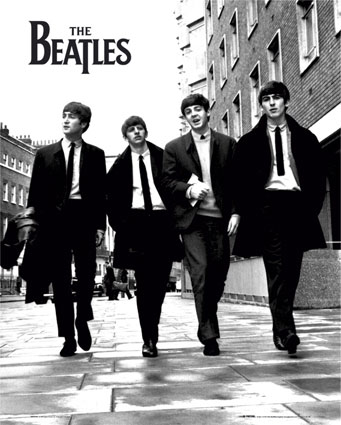
The Beatles

0 comments


The Beatles were an English rock band that formed in Liverpool, in 1960. With John Lennon, Paul McCartney, George Harrison, and Ringo Starr, they became widely regarded as the greatest and most influential act of the rock era. Rooted in skiffle and 1950s rock and roll, the Beatles later experimented with several genres, ranging from popballads to psychedelic rock, often incorporating classical elements in innovative ways. In the early 1960s, their enormous popularity first emerged as "Beatlemania", but as their songwriting grew in sophistication they came to be perceived as an embodiment of the ideals shared by the era's sociocultural revolutions.
 
 
John Lennon


John Winston Lennon was born in Liverpool on October 9, 1940, during the height of WWII, his father, Fred Lennon, off at sea. His father didn't turn up again until five years later, and when he did he tried to take john away from his mother, Julia, when she refused to restart her life with him. Instead, he grew up in the Liverpool suburb of Woolton, with his Aunt Mimi and Uncle George, at 251 Menlove Ave, which became nicknamed Mendips. Julia died in 1958, in an automobile accident practically in front of Mendips. Aunt Mimi ran a very strict household. John very quickly became bored at school, preferring drawing and writing about his classmates and teachers rather than his studies. Rebellious at an early age, he had a very rough school history, sagging off from school (going AWOL from classes) and petty stealing. His future looked bleak until Mimi got the headmaster of the Quarrybank school to write a letter of recommendation for John to the Liverpool Art College, because of his drawings. It was at Liverpool Art College, in 1956, a friend played him Elvis' Heartbreak Hotel, and John's musical interest was piqued. Then he heard Lonnie Donegan's Rock Island Line on Radio Luxembourg, and became part of the new Skiffle craze by begging his Aunt Mimi until she broke down and bought him a guitar, although she forever told him he would never get anywhere with it. He started his own band, the Quarrymen, with his long time pal and fellow troublemaker Pete Shotton, singing all the popular songs, sometimes making up the words when he couldn't get them all off the radio. Also in the Quarrymen were Nigel Walley and Ivan Vaughan, the rest of John's gang. It was Ivan Vaughan who introduced John to his friend, Paul McCartney, in 1957.

Top
Paul McCartney


On June 18, 1942, James Paul McCartney was born at Walton General Hospital in Liverpool. His brother, Michael, who's full name is Peter Michael McCartney, and who later went by the name of Mike McGear, was born two years later. His family moved a few times, when he was 13, they moved to 20 Forthlin Road in Allerton, just across a golf course and a little over one mile away from where John lived with his Aunt Mimi. His mother Mary died of breast cancer when he was fourteen, while the two brothers were away at Boy Scout camp. Before the war, Paul's father was a Cotton salesman during the day, and a jazz musician with Jim Mac's Jazz Band by night. The antithesis of John Lennon as a school boy, Paul did very well in school. When Lonnie Donnegan appeared in Liverpool and the Skiffle craze hit, Jim McCartney scraped together £15 for a guitar for Paul. Paul's friend Ivan Vaughan invited Paul to Woolton to see the Quarrymen play in Woolton on July 6, 1957, but not really to hear the Quarrymen, it was because Vaughan had promised Paul it would be a great place to pick up girls, which Paul was already very interested in at the age of 14. Later in the afternoon, after hearing the Quarrymen play, Paul borrowed a guitar and impressed the boys with all the chords and the words to "Twenty Flight Rock". Paul's first impression of John was that he was drunk. But Paul wrote down the words for "Twenty Flight Rock" and "Be Bop a Lula" for him so that John could learn them. A few days later Pete Shotten told Paul the others wanted him to join the band.
Top
George Harrison


George Harrison was born February 25, 1943, making him the youngest Beatle. The only Beatle who's childhood was not marred by divorce or death, he had two brothers, Harold Jr. and Peter, and a sister, Louise. His father, Harold, was a bus driver, and his mother a housewife, who all the kids in the neighborhood knew and liked. He attended Dovedale Primary school, two forms behind John Lennon, and then Liverpool Institute, one form below Paul McCartney. George and Paul took the same bus to school, and soon found they had music and guitars in common. George and his brother Peter had formed a Skiffle band, and because they were so young, they had to sneak out of the house to play their first engagement. Paul introduced the skinny and pimple-faced George to the Quarrymen, who was only 14 at the time. Not old enough to join the group, George hung around with the boys, and came to idolize John, doing everything he could to emulate him. George stood in the back of the room at all their shows with his guitar. A few times he filled in for the regular guitarist who didn't show up, and the boys were also welcomed in George's house by his mother to practice and for an occasional "jam buttie", encouragement which infuriated John's Aunt Mimi. Gradually, George became a member of the group, which by then had come to be called Johnny and the Moondogs.
Top

Ringo Starr


Richard Starkey was born on July 7, 1940, making him the oldest Beatle, three months older than John. Although remaining cheerful throughout his childhood, it was filled with hospital time, for appendicitis at 6, and a cold which developed into pleurisy when he was 13, causing him to miss much school. By fifteen he could just barely read and write. Like the other Beatles, Ritchie also eventually became caught up in Liverpool's Skiffle craze. After starting his own group, he joined The Raving Texans, a quartet which played while Rory Storm sang. During this time, he got the nickname Ringo, because of the rings he wore, and because it sounded "cowboyish", and the last name Starr so that his drum solos could be billed as "Starr Time". Ringo first met the Beatles in Hamburg in October 1960 while there performing with what had become Rory Storm and The Hurricanes. Ringo joined the Beatles on August 18, 1962. Rory Storm was magnanimous about the theft of his drummer, but Pete Best fans were upset, holding vigils outside Pete's house and rioting at the Cavern Club, shouting "Pete Best forever! Ringo never!" His health would cause him problems again later, he missed three quarters of the 1964 tour of Scandanavia, Holland, the Far East and Australia, to have his tonsils out. The Beatles' first movie, originally to be called Beatlemania became to be called A Hard Day's Night because it was something Ringo had said one evening after a long and particularly
 grueling session

sumber: http://www.angelfire.com/ny/Beatles420/Profile.html#To


MUSIC FOR YOU © 2011 Designed by Maiahost Web Hosting introducing the cheapest CPanel Hosting on Fast, Non-Overloaded Shared and Semi-Dedicated Servers